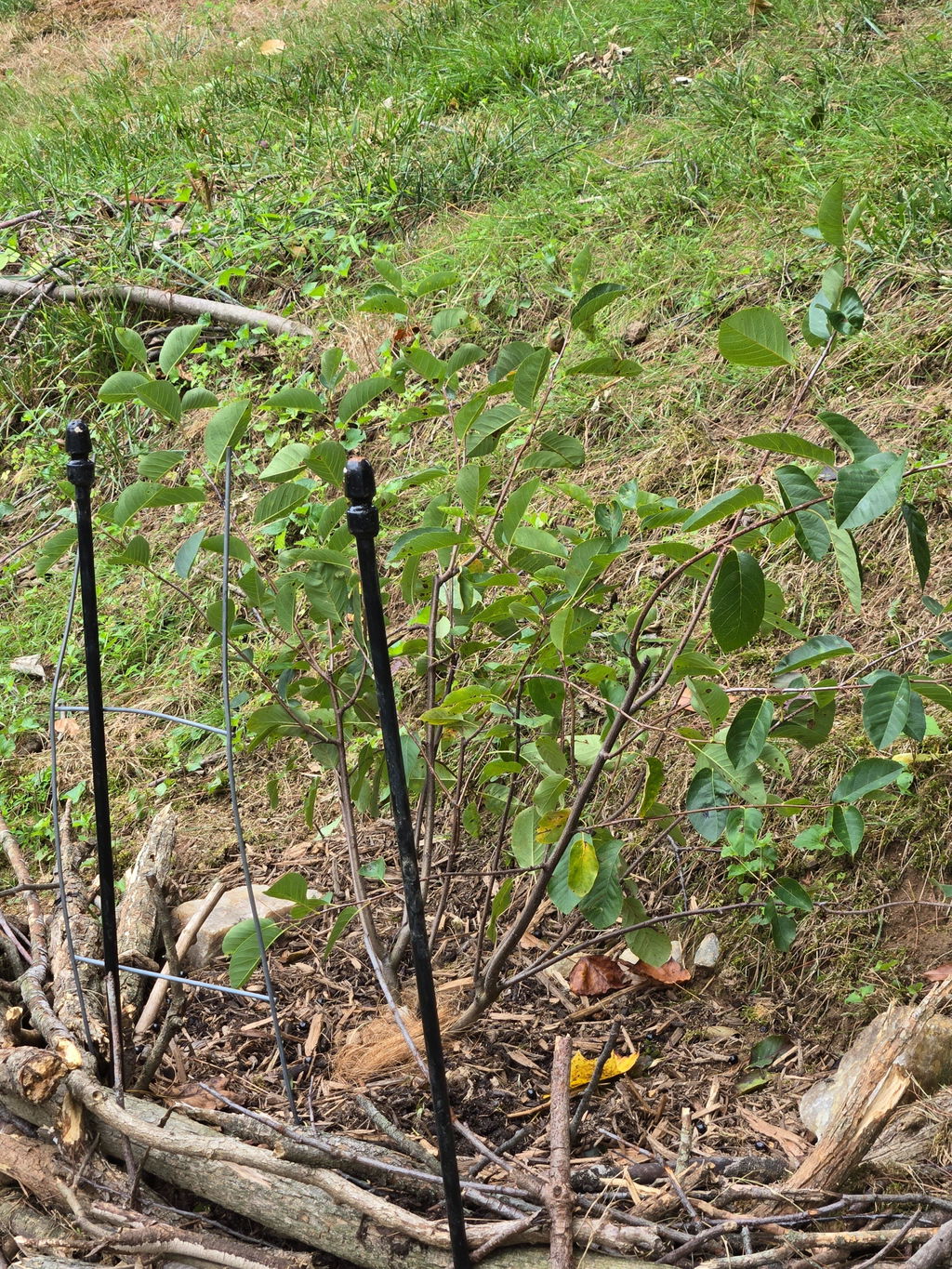
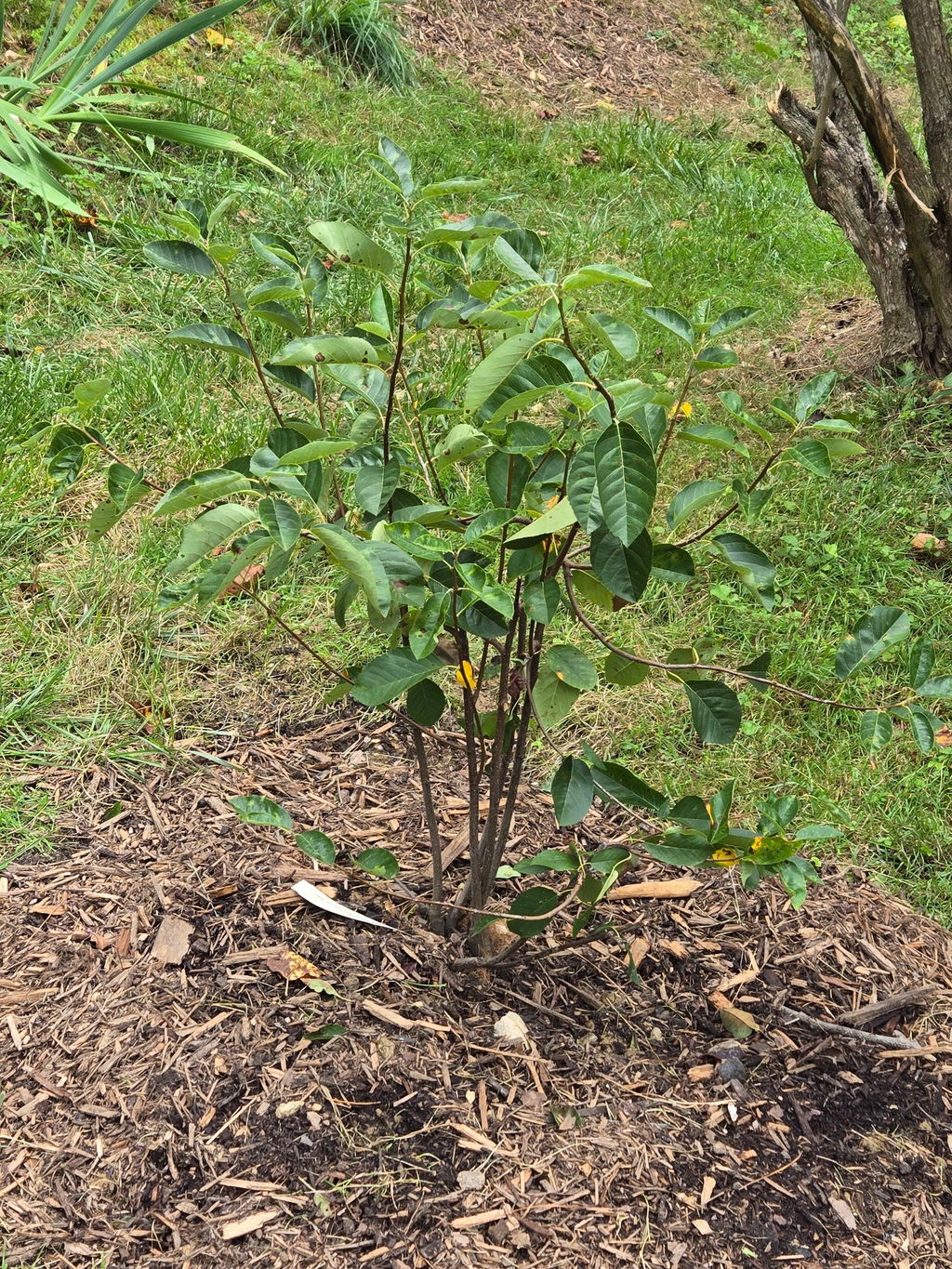
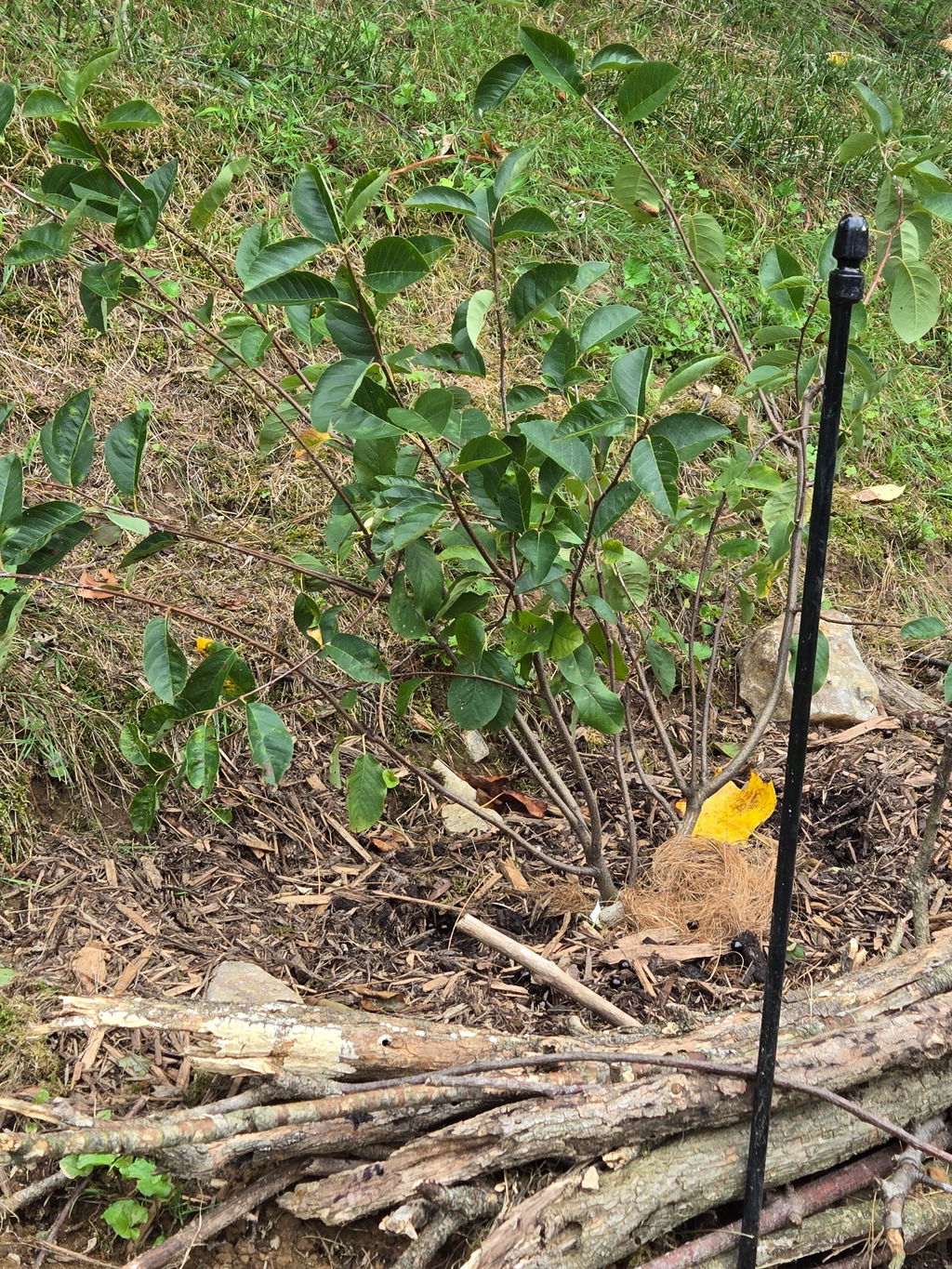
Amelanchier stolonifera
Overview
Uses: Hedgerows, mass plantings, erosion control, woodland gardens, naturalized areas, edible landscaping, pollinator gardens.
Benefits: Compact, colony-forming native shrub that spreads by stolons to create dense thickets of ornamental and ecological value. Produces abundant edible berries favored by songbirds and gardeners alike. Exceptional adaptability to poor, dry, and rocky soils where taller serviceberry species struggle. Low profile makes it ideal for understory plantings, slope stabilization, and informal hedgerows.
USDA Hardiness Zones: 4–9
Sun: Full Sun to Partial Shade
Life Cycle: Deciduous Shrub
Growth Habit: Spreading, Mounding — low, stoloniferous shrub forming dense colonies.
Bloom Color: White
Foliage Color: Green, turning yellow to orange and red in fall
Mature Height: 3–5 feet
Mature Width: 4–6 feet per clump, spreading by stolons
Bloom Season: Early to mid spring
Growth Rate: Slow
Summary
Running Serviceberry is a low-growing native shrub that delivers the full four-season appeal of the serviceberry genus in a compact, spreading form. In early spring, upright clusters of delicate white flowers emerge before or alongside the new leaves, providing critical early-season nectar for native bees and other pollinators when few other plants are blooming.
By early summer, sweet, dark purple berries ripen with the same blueberry-like flavor that makes the Amelanchier genus a favorite among foragers and wildlife gardeners. Songbirds compete eagerly for the harvest, and what remains can be picked for fresh eating, jams, or baking. The medium green foliage transitions to warm shades of yellow, orange, and red in fall, and the fine, twiggy winter silhouette adds quiet texture to the dormant landscape.
What sets Running Serviceberry apart from its taller relatives is its stoloniferous habit. Rather than growing upward into a small tree, it spreads laterally by underground runners to form dense, low thickets typically reaching just three to five feet tall. This makes it a natural fit for slope stabilization, informal hedgerows, and mass plantings where a taller serviceberry would overwhelm the space. It thrives in the rocky, thin-soiled, sun-exposed edges and ridgelines of its native range across eastern North America, tolerating drought and poor soils once established.
Care
Running Serviceberry Care
Plant Running Serviceberry in full sun to partial shade. Berry production and fall color are strongest in sunnier locations, but the shrub performs reliably in dappled light and woodland edges. It prefers well-drained, slightly acidic soils but adapts to a wide range of conditions including sandy, rocky, and lean soils. Avoid consistently wet or waterlogged sites.
Water regularly during the first growing season to establish roots. Once established, Running Serviceberry is moderately drought tolerant and requires little supplemental irrigation under normal conditions. Mulch lightly around the base to retain moisture and suppress competing weeds during establishment.
A light application of slow release fertilizer in early spring supports healthy growth but is not essential in reasonably fertile soil. Pruning is rarely needed. Remove any dead or damaged stems in late winter. If the colony spreads beyond its intended area, unwanted suckers can be removed or transplanted.
Size
What Size is the Running Serviceberry for Sale Online?
Our Running Serviceberry ships in a greenhouse-grade grow pot and is appropriately sized for its container at the time of shipment. If you have specific sizing or planting questions, please contact us.
How Large Does Running Serviceberry Grow?
Running Serviceberry typically reaches 3 to 5 feet tall with individual clumps spreading 4 to 6 feet wide. Because it spreads by stolons, a single plant will gradually form a wider colony over time, making it an excellent choice for filling in slopes, borders, and naturalized areas.
Additional Information
What are some common names for this plant?
This plant is commonly known as Running Serviceberry, Running Juneberry, Dwarf Serviceberry, Dwarf Shadbush, and Thicket Shadbush. Like all serviceberries, it is sometimes called Juneberry in reference to its early summer fruiting period. Its botanical name was formerly listed as Amelanchier spicata in some references. The name “shadbush” comes from the historical coincidence of its bloom time with the spring shad fish runs in eastern rivers.
How is Running Serviceberry different from Allegheny Serviceberry?
Running Serviceberry stays compact at 3 to 5 feet tall and spreads by underground stolons to form colonies, while Allegheny Serviceberry grows into a multi-stemmed small tree reaching 15 to 25 feet. Running Serviceberry is better suited to mass plantings, hedgerows, and small spaces where a full-sized serviceberry would be too large.
Is Running Serviceberry deer resistant?
Running Serviceberry has low deer resistance. Because it stays below the typical browse line, it may need protection from deer in areas with heavy browsing pressure, particularly during establishment. Consider pairing it with deer-resistant shrubs and evergreens to reduce browsing impact in mixed plantings.
Does Running Serviceberry spread aggressively?
Running Serviceberry spreads steadily by stolons but is not considered aggressive or invasive. Its growth rate is slow, and unwanted suckers are easy to remove or transplant. The spreading habit is a benefit in naturalized plantings, erosion control, and hedgerow applications where filling in bare ground is the goal.
What wildlife does Running Serviceberry support?
The flowers provide early-season nectar for native bees and other pollinators. The berries are eagerly consumed by songbirds including robins, cedar waxwings, and bluebirds. The foliage serves as a larval host for several butterfly species including the Red-Spotted Purple and Striped Hairstreak. Dense thickets also provide nesting cover for ground-nesting birds and small mammals.