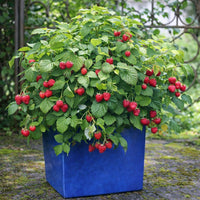
Rubus 'Encore'
Overview
Uses: Backyard berry gardens, edible landscapes, raised beds, kitchen gardens, homestead fruit production.
Benefits: Late-season summer-bearing variety that extends the raspberry harvest, large firm berries with balanced sweet flavor, nearly thornless erect canes, good disease resistance including tolerance to phytophthora root rot.
USDA Hardiness Zones: 4–8
Sun: Full Sun
Life Cycle: Deciduous Shrub
Growth Habit: Upright — vigorous erect canes with sturdy fruiting laterals.
Bloom Color: White
Mature Height: 4–5 ft.
Mature Width: 2–4 ft.
Bloom Season: Late Spring
Growth Rate: Fast
Summary
A late-season summer-bearing raspberry bred to fill the harvest gap between early summer and fall varieties.
Rubus 'Encore' was developed by the Cornell University Small Fruit Breeding Program and released in 1980 from a cross of Canby and Cherokee. Bred to ripen later in the summer-bearing window, Encore fills an important role for gardeners who want to extend fresh raspberry picking into late July and early August before everbearing varieties begin.
In late spring, the plants produce white blossoms that attract pollinators and develop into large, firm, bright red berries. The fruit has a balanced sweet flavor with enough depth to stand out in fresh eating, freezing, and preserves. The nearly thornless, erect canes are vigorous and productive, making Encore one of the more manageable raspberry varieties in the garden.
Encore also shows moderate tolerance to phytophthora root rot, giving it an edge in gardens where drainage is less than perfect.
Care
Encore Raspberry Care
Plant in full sun for the best berry production. Raspberry plants perform best with at least six to eight hours of direct sunlight each day.
Provide fertile, well-drained soil with consistent moisture during the growing season. While Encore shows some tolerance to root rot, good drainage is still important. Mulching with organic material helps conserve moisture and reduce weed competition.
Encore is a summer-bearing (floricane) variety, producing fruit on second-year canes. After harvest, remove the spent fruiting canes at ground level and allow new first-year canes to develop for the following season. Thin canes during late winter to maintain good airflow and strong production.
If desired, apply a light feeding of slow release fertilizer in early spring to support healthy cane development and fruit production.
Size
What Size is the Encore Raspberry Plant for Sale Online?
Plants ship in a greenhouse-grade grow pot and are appropriately sized for their container at the time of shipment. If you have specific sizing or planting questions, please contact us.
How Large Does the Encore Raspberry Plant Grow?
At maturity, Encore raspberry plants typically reach about 4–5 feet tall and spread gradually through new canes, forming productive raspberry patches over time.
Additional Information
What are some common names for this plant?
This plant is commonly known as Encore raspberry or Encore red raspberry.
What makes Encore different from other raspberry varieties?
Encore was bred at Cornell to ripen later in the summer-bearing season, bridging the gap between early summer raspberries and fall everbearing types. Its nearly thornless canes, large fruit, and moderate root rot tolerance distinguish it from older varieties.
Is Encore a summer-bearing or everbearing raspberry?
Encore is a summer-bearing (floricane-fruiting) raspberry. It produces fruit on second-year canes, with the harvest arriving in late July to early August in most climates.
Do Encore raspberry plants spread?
Raspberry plants naturally produce new canes from their roots, gradually expanding into productive berry patches if space allows. Regular management of suckers helps keep the planting tidy.
Where do Encore raspberries fit best in the landscape?
Encore raspberries work well in berry gardens, kitchen gardens, and edible landscapes. Explore more fruit-producing plants in our Berries and Fruit & Vegetable Plants collections.